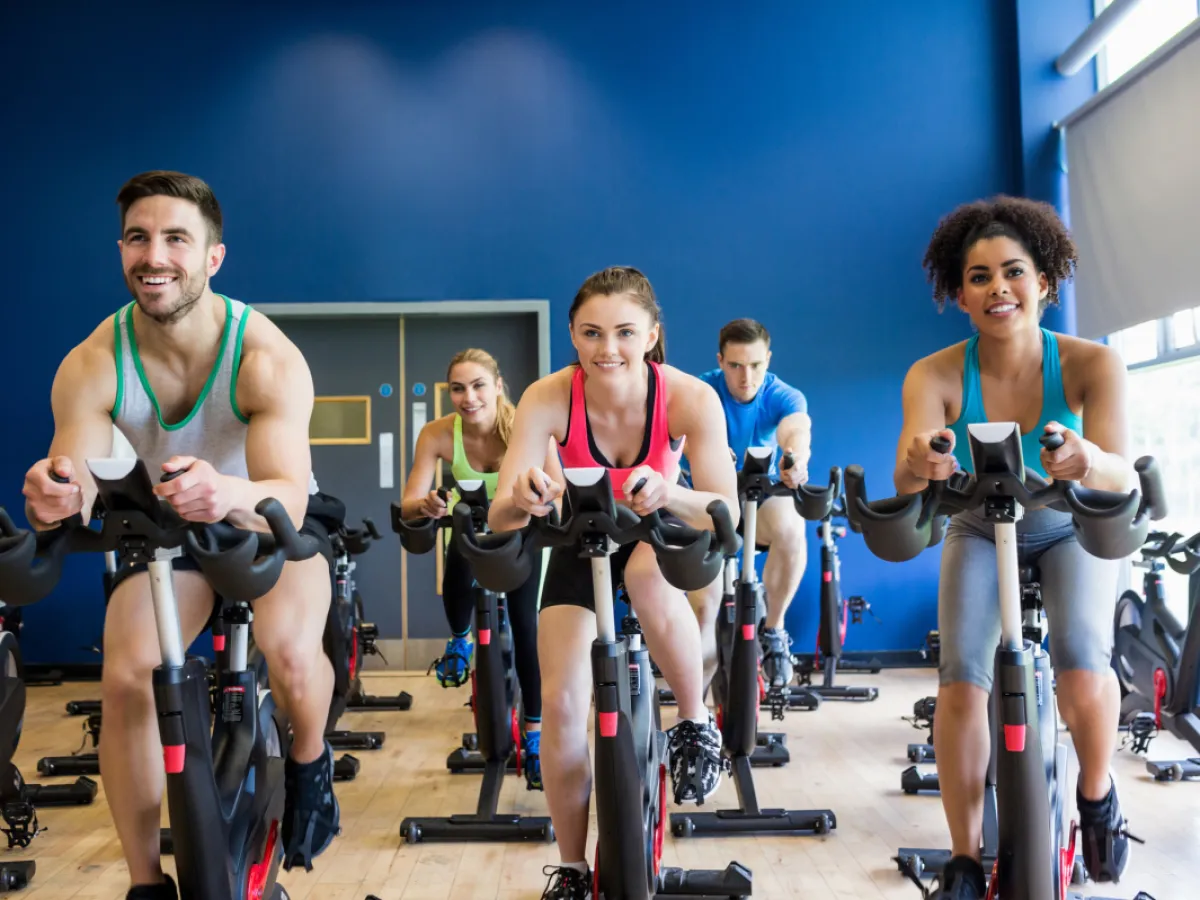
You’ve dialed in your bike fit. You clip in correctly. You bring the right water bottle and show up early enough to adjust the seat height. Your underwear is whatever you grabbed this morning.
After forty-five minutes on a heated studio saddle, that decision becomes very apparent.
What Makes Indoor Cycling Different From Other Workouts
Indoor cycling creates a set of fabric conditions that most athletic underwear wasn’t designed for. The sustained saddle contact — identical position for 45 to 60 minutes — creates friction conditions that are fundamentally different from running or lifting.
In outdoor cycling, you shift position, stand on climbs, and move naturally. In a heated studio, you’re stationary, seated, generating intense heat in a closed environment, and sweating at a rate that most gym activities don’t match. The combination of heat, sustained saddle contact, and the enclosed studio environment creates a specific underwear challenge.
Synthetic fabrics in this environment create two problems. First, heat retention. A spin studio at full capacity runs significantly hotter than a standard gym floor. Synthetic underwear traps heat against the saddle contact surface. Second, bacterial proliferation. High heat and sustained moisture from sweating creates a rapid bacterial growth environment in synthetic fabric, which contributes to both skin irritation and odor problems that build over time.
Indoor cycling is one of the few workouts where your underwear choice directly affects your ability to complete the session comfortably.
What to Look for in Underwear for Spin Class
Saddle-Appropriate Softness
The saddle contact area bears your full body weight for the duration of class. Any seam, texture irregularity, or fabric stiffness in that area translates directly to discomfort. Natural fiber softness maintains consistent comfort under this type of sustained, directional pressure in a way that textured synthetic fabrics don’t.
Breathability in a Closed Heat Environment
Studio cycling generates more heat per square meter than most gym environments. Your underwear needs to allow body heat to escape rather than creating an insulating layer between your skin and your clothing. Organic cotton boxer briefs with natural fiber breathability manage heat dissipation without synthetic coatings that block airflow.
No Abrasive Seam Placement
Seams at the leg opening or across the seat area become abrasion points under sustained saddle contact. Flatlock construction positions seams flat against the skin. For spinning specifically, seam placement matters as much as fabric type.
Waistband That Stays in Position
A waistband that rolls or shifts during cycling creates asymmetric pressure and distraction. Look for a wide, structured waistband with a cotton inlay that maintains position through the postural demands of 45 minutes of seated cycling.
Anti-Bacterial Resistance Through Fiber Structure
Natural cotton fiber doesn’t trap bacteria the way synthetic polymer fibers do. This matters during indoor cycling because the high heat and moisture environment is ideal for bacterial growth. Organic cotton’s natural resistance isn’t a chemical treatment — it’s a fiber property that doesn’t degrade after repeated washing.
Practical Indoor Cycling Gear Considerations
Choose boxer briefs over briefs for spin class. The extra leg coverage prevents inner thigh skin contact with the saddle rail or shorts material during lateral movement. Briefs leave this area exposed to friction that boxer briefs prevent.
Wash after every single class. Indoor cycling generates significant bacterial load from heat and sustained sweat exposure. No underwear — regardless of fabric — should be reworn after a spin class without washing. Natural fiber underwear washed promptly after class maintains freshness better than synthetic alternatives.
Consider your shorts layering. If you wear cycling shorts with a chamois over your underwear, the underwear question changes. The chamois handles the saddle interface. If you’re wearing regular workout shorts, the underwear is the primary protection.
Test during a class before race day. If you’re building toward a specific cycling event or challenge, wear your intended underwear during at least two full practice sessions first. Discomfort emerges around minute thirty in spin conditions and doesn’t resolve during the class.
Prioritize sizing for saddle comfort. Organic cotton boxer briefs that are too snug in the seat area create additional compression on top of saddle pressure. The correct size for spin class may be one step roomier than your standard athletic fit.
Why Your Instructor Doesn’t Talk About This
Cycling instructors focus on form, cadence, resistance, and motivation. They’re not textile scientists. The underwear variable falls outside their domain, even though it directly affects the experience they’re trying to create in the room.
The gear conversation in cycling has always focused on the bike, the shoes, and the shorts. The base layer has been left to chance.
What serious outdoor cyclists figured out decades ago — that the interface between your body and the saddle is the most important comfort variable in the sport — applies equally to indoor cycling. The underwear you wear to spin class is that interface.
Getting it right doesn’t require expensive cycling-specific underwear with padding systems. It requires natural fiber softness, flat seams, breathable construction, and a waistband that stays where you put it. Those criteria are straightforward. Meeting them makes a forty-five minute spin class a different experience than ignoring them does.
