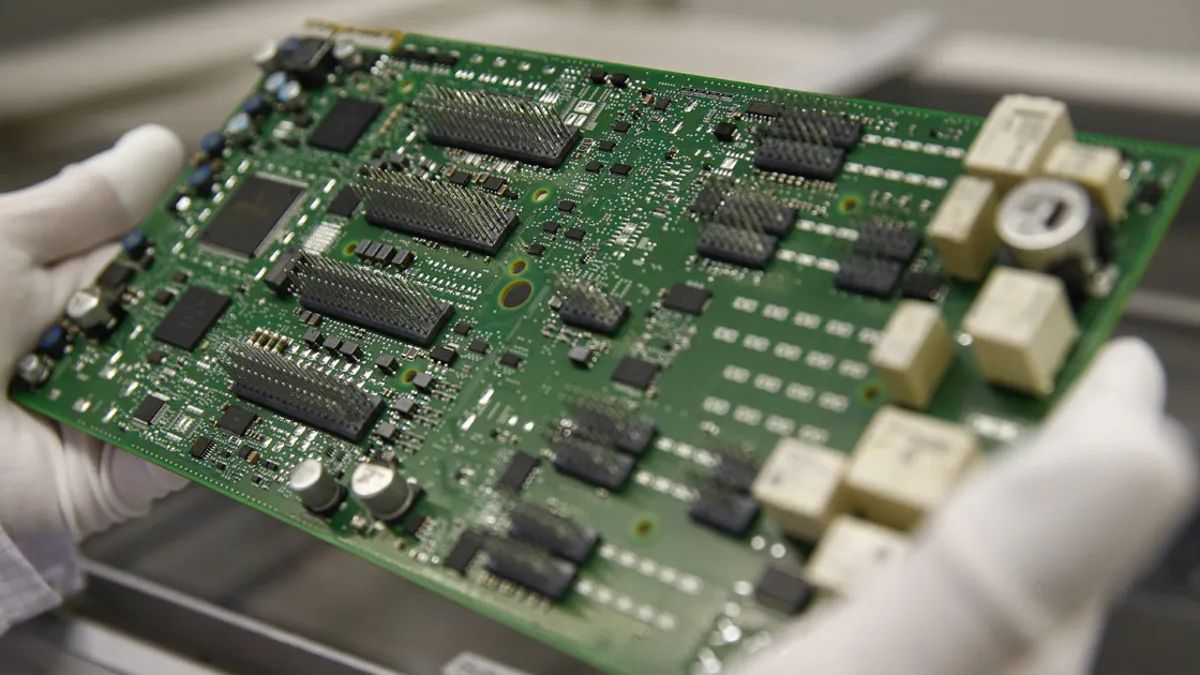
The automotive industry is undergoing a profound transformation, with advanced electronics becoming central to modern vehicles. At the heart of this transformation lies the automotive ECU chip, a critical component that manages and controls various vehicle functions. As vehicles evolve from purely mechanical machines to highly sophisticated electronic systems, the role of the ECU chip has expanded, making it a cornerstone for innovation in safety, efficiency, and driving experience.
Understanding Automotive ECU Chips
An automotive ECU chip, or Electronic Control Unit chip, is essentially the brain of a vehicle’s electronic systems. These chips process information from sensors, manage engine performance, regulate fuel efficiency, control braking systems, and even enable advanced driver-assistance features. Traditionally, ECU chips were primarily responsible for engine management. Today, however, their scope has broadened to include complex functions like adaptive cruise control, collision avoidance, and electric powertrain management. The evolution of automotive ECU chips has made modern cars smarter, safer, and more environmentally friendly.
Key Innovations in ECU Chip Technology
Recent innovations in automotive ECU chip technology are redefining the driving experience. One significant trend is the integration of artificial intelligence and machine learning into ECU systems. This allows vehicles to analyze driving patterns, anticipate road conditions, and optimize performance in real time. AI-enabled ECU chips can adjust engine parameters, braking systems, and energy consumption dynamically, enhancing both safety and efficiency.
Another critical innovation is the development of high-performance microcontrollers within ECU chips. These microcontrollers enable faster processing speeds and better handling of large amounts of data from multiple sensors simultaneously. As vehicles become more connected and autonomous, the need for high-speed, reliable processing becomes crucial. Automotive ECU chips are now capable of supporting real-time decision-making, which is essential for self-driving technologies.
The Role of ECU Chips in Autonomous Vehicles
Autonomous and semi-autonomous vehicles rely heavily on automotive ECU chips. These chips coordinate a complex network of sensors, cameras, LiDAR, and radar systems to make driving decisions. The ECU chip interprets this data to control steering, acceleration, braking, and other critical functions. As a result, the reliability, speed, and intelligence of ECU chips directly influence the performance and safety of autonomous vehicles. Innovations in ECU chip technology, such as enhanced processing power and advanced AI integration, are paving the way for fully autonomous cars to become mainstream in the near future.
Enhancing Safety with Smart ECU Chips
Safety is a paramount concern in modern vehicles, and automotive ECU chips play a pivotal role in this area. Advanced ECU chips monitor tire pressure, brake performance, stability control, and airbag deployment. They can detect potential hazards and respond faster than a human driver, preventing accidents or minimizing their impact. Furthermore, with innovations in predictive analytics, ECU chips can learn from past driving scenarios to anticipate risks and take preventive actions. This proactive approach to safety is one of the most promising aspects of automotive ECU chip technology.
Improving Fuel Efficiency and Sustainability
Fuel efficiency and environmental impact are critical factors in today’s automotive landscape. Modern automotive ECU chips contribute significantly to reducing emissions and optimizing fuel consumption. Through precise engine management, hybrid system coordination, and energy recovery systems, ECU chips ensure that vehicles operate at maximum efficiency. In electric vehicles, ECU chips manage battery performance, optimize charging cycles, and monitor energy usage, extending the vehicle’s range and lifespan. As sustainability becomes a global priority, ECU chip innovations are key to creating greener and more energy-efficient vehicles.
Challenges in Automotive ECU Chip Development
Despite remarkable advancements, developing cutting-edge automotive ECU chips comes with challenges. The increasing complexity of vehicle electronics requires sophisticated chip design, rigorous testing, and robust cybersecurity measures. ECU chips must be resilient against heat, vibration, and electromagnetic interference, which are common in automotive environments. Additionally, as vehicles become more connected, the risk of cyberattacks increases. Manufacturers are investing heavily in secure ECU chip designs to protect both vehicle performance and user data from potential threats.
Future Trends in ECU Chip Technology
Looking forward, several trends are expected to shape the future of automotive ECU chips. One key trend is the integration of vehicle-to-everything (V2X) communication. This technology enables vehicles to communicate with each other, traffic signals, and infrastructure, enhancing traffic flow, safety, and efficiency. Automotive ECU chips will play a central role in processing this vast stream of data in real time.
Another emerging trend is the miniaturization of ECU chips. Smaller, more powerful chips allow for more sophisticated electronic systems without increasing vehicle weight or space requirements. This miniaturization, combined with enhanced processing power, will enable next-generation features such as fully autonomous navigation, advanced infotainment systems, and predictive maintenance capabilities.
Quantum computing and neuromorphic computing also hold potential for the future of automotive ECU chips. These technologies could revolutionize how vehicles process information, enabling ultra-fast data analysis, predictive modeling, and even real-time learning from driving environments. While still in experimental stages, these innovations signal a significant leap forward in vehicle intelligence.
Impact on the Automotive Industry
The evolution of automotive ECU chip technology has far-reaching implications for the entire automotive industry. Car manufacturers are increasingly collaborating with semiconductor companies to develop specialized ECU chips that cater to electric and autonomous vehicles. This partnership is accelerating innovation and driving competition in the market. Furthermore, automotive ECU chips are influencing regulations, safety standards, and industry best practices, ensuring that vehicles meet the highest technological and safety benchmarks.
Consumers also benefit from these advancements. Vehicles equipped with smart ECU chips offer improved performance, reduced maintenance costs, enhanced safety features, and more convenient driving experiences. As automotive ECU chip technology continues to evolve, the line between vehicle and intelligent machine will blur, making driving more enjoyable, safe, and efficient than ever before.
Conclusion
Automotive ECU chips are at the heart of the modern driving revolution. From improving safety and fuel efficiency to enabling autonomous driving and advanced connectivity, these chips are transforming vehicles into intelligent machines capable of learning, adapting, and optimizing performance. Innovations in ECU chip technology, including AI integration, high-performance microcontrollers, and secure, resilient designs, are shaping the future of mobility. As the automotive industry continues to embrace these innovations, drivers can look forward to a safer, more efficient, and more connected driving experience, where the automotive ECU chip serves as the brain behind every intelligent decision on the road. The future of driving is being written in silicon, and automotive ECU chips are leading the way.